. Beautiful Pakistan: Historical places
  • RSS
  • Facebook
  • Youtube
  • We have moved to new website As of today, all new content will only be posted on the new site
  • Lakes In Pakistan

    We have been moved to our new website. As of today, all new content will only be posted on the new site which can be accessed by going to: http://truthaboutpakistan.com/

  • Lakes In Pakistan

    We have been moved to our new website. As of today, all new content will only be posted on the new site which can be accessed by going to: http://truthaboutpakistan.com/

Showing posts with label Historical places. Show all posts

Sunday, March 06, 2011

Bala Hisar Fort Pakistan

Posted by khubaib abbasi On 4:02 PM

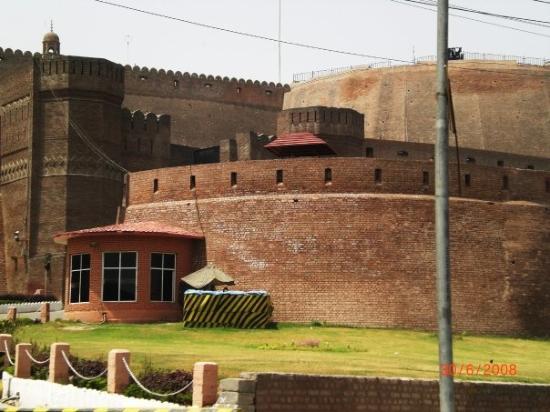
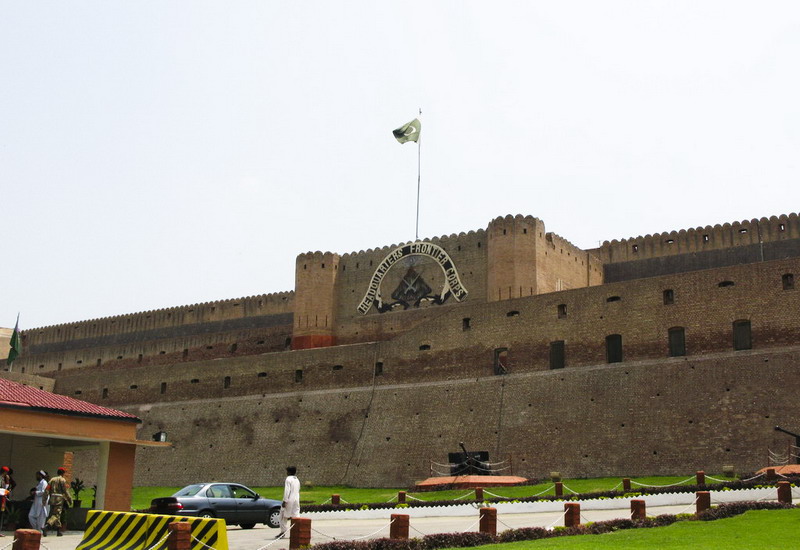
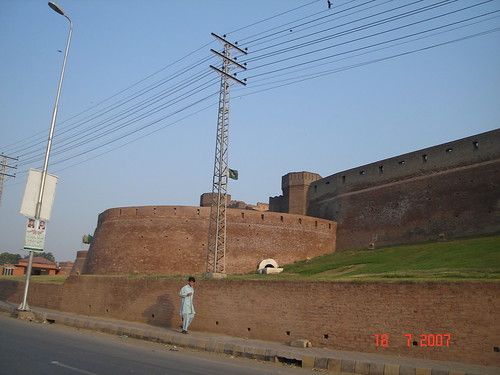
Bala Hisar Fort is one of the most historic places of Peshawar. The word Bala Hisar is from Persian, meaning, “elevated or high fort”. According to Dr. Hussain Khan, the name was given by the Afghan King Timur Shah Durrani (1773–1793). The Sikhs who conquered Peshawar in the early 19th century named it Samir Garh in 1834 but the name did not become popular.. Located just to the North West of the city and the North of the Lady Reading Hospital, Bala Hisar covers a part of the ancient Shalamar Garden of Peshawar. This many centuries old Fort of Peshawar, along with many gardens around the city, were  destroyed by the Sikhs, but a  Sikh sardar, Kurruck Singh,  is said to have rebuilt the fort of Bala Hisar of unburnt bricks and named its Suumunger.These are the references to the strengthening of the fort of Peshawar  by King Babar, which confirms the existance of the fort before Mughals.  The present burnt brick structure  of the fort belongs to the British era. This historic fort is now occupied by the Frontier Constabulary. 

The fort stands on a high mound in the northwestern corner of Peshawar City. Not long ago, the fort used to be conspicuously away from the old city of Peshawar, but now the construction of new buildings has covered space between the old city and the fort. However, the fort's position on a high mound gives a commanding and panoramic view of Peshawar and the entire Peshawar valley.
In the early nineteenth century, Peshawar was the summer capital of the Kingdom of Kabul and the Balahisar the residence of Afghan kings. The Sikhs fought and defeated the Kabul Barakzais in the Battle of Nowshera in early 1823. On conclusion of this battle, fought on the right bank river Indus, the Sikhs chased the retreating Afghans past Peshawar through the Khyber Pass.


Sunday, February 13, 2011

Lahore Pakistan

Posted by khubaib abbasi On 12:06 PM

Lahore is the capital of the Pakistan province of Punjab and the second largest city in Pakistan, after Karachi. The Lahore city lies along the Ravi River, situated approximately 25 kilometres (16 mi) from Wagah border crossing and is 32 kilometres (20 mi) from the Indian city of Amritsar.

Historically, Lahore has been a center of cultural heritage for many civilizations. Lahore successively served as regional capital of the empires of the Shahi kingdoms in the 11th century, the Ghaznavids in the 12th century, the Ghurid State in the 12th and 13th century, the Mughal Empire in the 16th century, the Sikh Empire in the early 19th century, and it was the capital of the Punjab region under the British Raj in the mid 19th and early 20th century. The traditional capital of Punjab for a thousand years, Lahore was the cultural center of Northern India extending from Peshawar to New Delhi.[16] Mughal structures such as the Badshahi Mosque, the Lahore Fort, Shalimar Gardens, and the mausolea of Jehangir and Nur Jehan are popular tourist attractions for the city. The population of lahore is approximately 10 million

Other attractive places of Lahore

Lahore Zoo
Established in 1872, was once considered one of the largest zoos in Asia.

The Mall
Historically a key city road, has many buildings from Mughal era and British Rule.

Walled City
Also known as the Old City, is the section of Lahore that was fortified by a city wall during the Mughal era. The wall had 13 gates, and much of the wall remains intact today.

Data Durbar
Complex where Hazrat Syed Abul Hassan ibn Usman ibn Ali Al-Hajweri, the famous Sufi saint of South Asia, is buried. Complex includes Hajveri Mosque, built in pre-Mughal era.

Chauburji
Chauburji has remains of an extensive garden known to have existed in Mughal times. Today, Chauburji is also known for its big bustling markets.

Hiran Minar
Just north of Sheikhupura town (on the outskirts of Lahore) lies a hunting complex known as the Hiran Minar. Hunting grounds were an important part of the physical environment of Mughal emperors, and the Hiran Minar is one of the best known and most beautiful of such sites. Its structures consist of a large, almost-square water tank with an octagonal pavilion in its center, built during the reign of Shah Jahan; a causeway with its own gateway connects the pavilion with the mainland and a 100-foot-high minar, or minaret. At the center of each side of the tank, a brick ramp slopes down to the water, providing access for royal animals and wild game. The minar itself was built by Emperor Jahangir in 1606 to honor the memory of a pet hunting antelope named Mansraj.



Saturday, February 05, 2011

Sheesh Mehal Pakistan

Posted by khubaib abbasi On 10:51 AM


The word "sheesh mehal" means The Palace of Mirrors. Sheesh Mehal is present in Lahore Pakistan. Sheesh mehal is a beautiful historical place in pakistan. Sheesh mehal was constructed under the reign of Mughal Emperor Shah Jahan in 1631-32. The ornate white marble pavilion is inlaid with pietra dura and complex mirror-work of the finest quality. The hall was reserved for personal use by the imperial family and close aides. It is among the 21 monuments that were built by successive Mughal emperors inside Lahore Fort, and forms the jewel in the Fort’s crown. Sheesh Mahal, in Urdu language, literally means 'Crystal Palace'. The solid brick foundations of Lahore Fort were laid in 1566 under the reign of Mughal emperor Akbar the Great on the location of an earlier mud-fort. To build the new fort, the Emperor brought experienced artisans after the completion of Fatehpur Sikri. The sheesh mahal was built by a famous architect of mughals. It was built in the middle of Akbar's rule. The façade, comprising of five cusped marble arches supported by coupled columns, opens into the courtyard. The engrailed spandrels and bases are inlaid with precious stones. This fort is constructed in white marble and red sandstone and its beauty is exaggerated by the Maotha Lake. The construction of this fort began in 1592 by Raja Man Singh.


Tuesday, January 25, 2011

Badshahi Mosque Pakistan

Posted by khubaib Abbasi On 5:03 PM

The word Badshahi is derived from the word Badshah which means king. Badshahi mosque was build by Mughal Emperor Aurangzeb. Badshahi mosque was build in 1673. Badshahi mosque is located in Lahore. Badshahi mosque is very beautiful mosque  in Pakistan. Badshahi mosque is largest mosque in Pakistan and in South Asia and is and is 6th largest mosque in the world. In 1993, the Government of Pakistan recommended the inclusion of the Badshahi Mosque as a World Heritage Site in UNESCO's World Heritage List, where it has been included in Pakistan's Tentative List for possible nomination to the World Heritage List by UNESCO.
he Badshahi Mosque was built opposite the Lahore Fort, emphasizing its stature in the Mughal Empire. It was constructed on a raised platform to avoid inundation from the nearby Ravi River during flooding. The Mosque's foundation and structure was constructed using bricks and compacted clay. The structure was then cladded with red sandstone tiles brought from a stone quarry near Jaipur in Rajasthan. The architecture and design of the Badshahi Mosque closely resembles that of the slightly smaller Jama Mosque in Delhi, India, which was built in 1648 by Aurangzeb's father and predecessor, Emperor Shah Jahan. Its design was inspired by Islamic, Persian, Central Asian and Indian influences. Like the character of its founder, the Mosque is bold, vast and majestic in its expression.
The interior of Main Prayer Hall is richly embellished with stucco tracery (Manbatkari), fresco work, and inlaid marble.
The exterior is decorated with stone carving as well as marble inlay on red sandstone, specially of lotiform motifs in bold relief. The embellishment has Indo-Greek, Central Asian and Indian architectural influence both in technique and motifs. n 2000, the repair work of marble inlay in the main vault was repaired under the supervision of Saleem Anjum Qureshi. On the occasion of the second Islamic Summit held at Lahore on February 22, 1974, thirty-nine heads of Muslim states offered their Friday prayers in the Badshahi Masjid, led by Maulana Abdul Qadir Azad, the 'Khatib' of the mosque.

Recently a small museum has also been added to the mosque complex, which contains relics of Muhammad, his cousin, and his daughter, Hazrat Fatima Zahra.


Copyright © 2010 Beautiful Pakistan. Powered by Blogger.